


Cover Crop Use Grows Nationally
National Cover Crop Survey Shows Strong Interest in the Conservation Practice
ANKENY, Iowa (DTN) -- Cover crop interest and adoption continue to gain momentum, as a new survey found growers planted more acres to the conservation practice year over year, extending a long-running growth trend.
The 2026 National Cover Crop Survey, released in early September, found respondents planted an average of 397.9 cover crop acres in 2025, up from 377.5 acres a year earlier. The survey also showed a steady increase in adoption over time, with average cover crop acreage among participants rising from 313 acres in 2021 to a projected 415 acres in 2026.
This year's survey, conducted by the Conservation Technology Information Center (CTIC), USDA Sustainable Agriculture Research and Education Center program and American Seed Trade Association, was completed online by 657 farmers in 46 states and Puerto Rico. Results showed a variety of agronomic and economic factors spur cover crop adoption.
"Though many fans of cover crops can't imagine not using them, other farmers choose whether or not to plant covers based on economics, field conditions, crop rotations or other factors," Ryan Heiniger, executive director of CTIC and Iowa farmer, said in a statement.
Here are some notable survey findings:
-- A mean yield increase of 3.5 bushels per acre (bpa) of corn and 1.5 bpa of soybeans following cover crops.
-- Better weed control following cover crops was reported by 31.2% of cover crop users, and by 87% of the growers who "planted green" into live, standing covers.
-- One in three cover crop users reported grazing or harvesting cover crops to feed livestock, and 77% of those who grazed said it increased net profit on their farm.
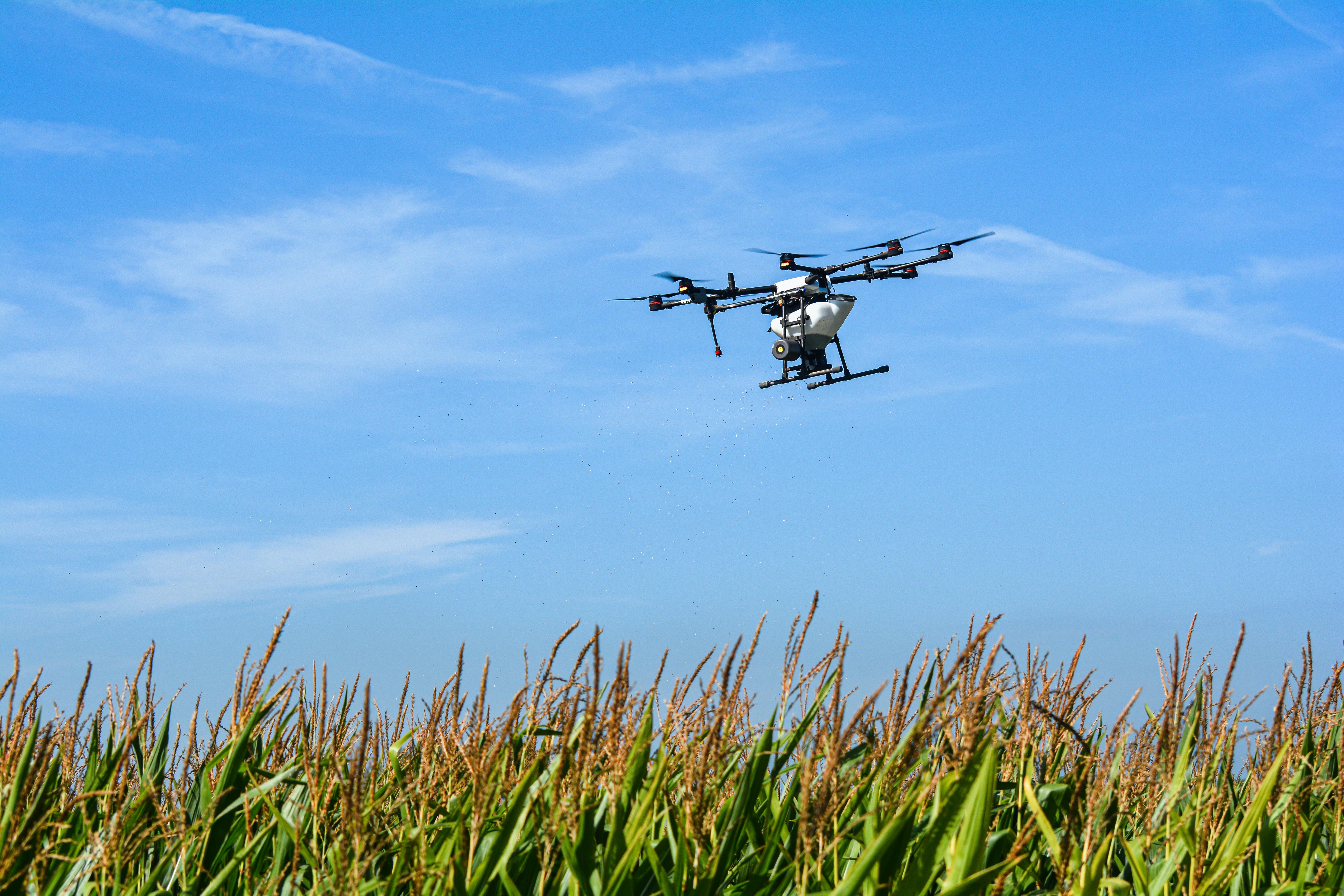
-- Drone use for cover crop seeding and termination continues to gain traction, with 16.3% of respondents using unmanned aerial vehicles in 2025 compared to just one survey respondent in 2023.
-- More than 60% of cover crop users said there are years when they do not plant them in certain fields. Late harvest, dry conditions and time and labor concerns were the primary reasons.
-- For respondents who reported never planting cover crops, 73.5% said they are open to trying the practice.
-- Of 256 cover crop users who reported receiving an incentive payment for planting them in 2025, 81.6% said they probably or definitely would continue planting cover crops.
P[L1] D[0x0] M[300x250] OOP[F] ADUNIT[] T[]
ECONOMICS AND STEWARDSHIP DRIVE ADOPTION
Southwest Iowa farmer Scot Bailey is among a growing number of producers expanding their use of cover crops. Three years ago, he seeded winter wheat on 40% of his nearly 1,000 row-crop acres after harvest to reduce erosion, curb nutrient runoff and provide additional forage for his 100-cow herd. Encouraged by the results, Bailey increased cover crop adoption to 70% of his acres in 2024 and 100% in 2025.
He receives $35 per acre to plant cover crops from the Soil and Water Outcomes Fund, which provides financial incentives to farmers who begin or expand on-farm conservation practices that yield positive environment outcomes such as carbon sequestration, emission reductions and water quality improvement. That payment more than covers the cost to plant and terminate the winter wheat, plus cows can graze on the wheat for a month or more in the fall.
"That saves me at least 30 days of haying cows at two round bales a day, so that's 60 bales or more I can sell (valued at about $5,000)," Bailey said. "With the farm economy today, earning a little extra money is good.
"Plus, when it rains, I don't have to worry about erosion and nutrient runoff like in the past," he added. "Continually working to improve water quality is always important."
COVER CROP ACREAGE BOOM
Farmers and landowners in the Greater Des Moines Watershed enrolled more than 300,000 acres of cover crops in state cost-share programs this fall.
Iowa Secretary of Agriculture Mike Naig announced the initial results of the Greater Des Moines Watershed Program earlier this month. The program is designed to encourage farmers and landowners in 22 counties upstream from central Iowa to plant more cover crops to improve water quality in the Des Moines and Raccoon rivers, which provide drinking water to the Des Moines metro area. New and existing cover crop users within the watershed can receive up to $25 per acre in cost-share and enroll up to 500 acres.
"The Greater Des Moines Watershed Program shows what we can accomplish when we have dedicated resources and intentionally focus on fields in parts of the state that can have significant impact on water quality," Naig said in a statement. In 2025, 109,000 acres of cover crops were enrolled in cost-share programs in the region.
Cover crop cost-share enrollment statewide exceeded 1 million acres in 2026, a first to exceed that milestone.
COVER CROP FIELDWORK STUDY
Research released Wednesday, Sept. 9, by Practical Farmers of Iowa (PFI) found that cover crops can help preserve and, in some cases, expand the limited windows farmers have for fieldwork.
"For years, we've heard farmers tell us that cover crops are helping them get into their fields earlier in the spring and get through harvest without leaving ruts," Stefan Gailans, PFI's research director, said in the news release. "We wanted to take a closer look and see if the data backs that up."
In 2025, 38 farmers across Iowa, Minnesota, Nebraska and Wisconsin tracked whether they could work fields with a history of cover crop use each week from spring through fall. PFI compared those observations with USDA estimates, using the same definition of a suitable fieldwork day.
PFI farmers reported 51 suitable spring fieldwork days, one more than the USDA average. They reported 51 days in summer, matching the USDA average, and 27 days in fall, one fewer than the USDA average. Altogether, farmers reported, on average, 129 suitable fieldwork days, matching the USDA average.
Margaret Hogan of Earlville, Iowa, reported 157 days when she could work her fields from April through November, compared with 127 days for her USDA district over the same period. In the spring, she reported 67 days suitable for fieldwork, compared with 46 days for the USDA district average. She has used cover crops for more than 10 years.
"The most valuable aspect of conducting this trial for me is being able to show others another reason to use cover crops," Hogan said in the news release.
Learn more about PFI's cover crop program and enrolling acres at https://www.dtnpf.com/….
Read the full survey at https://ctic.org/….
Find the PFI study at https://practicalfarmers.org/….
Learn more about the Greater Des Moines Watershed Program at https://www.cleanwateriowa.org/….
Matthew Wilde can be reached at matt.wilde@dtn.com.
Follow him on social media platform X @wildeagwriter
(c) Copyright 2026 DTN, LLC. All rights reserved.

