


Expectations Grow for Mexico Trade Deal
Agriculture Leaders Use Tri-National Accord to Navigate USMCA Uncertainty
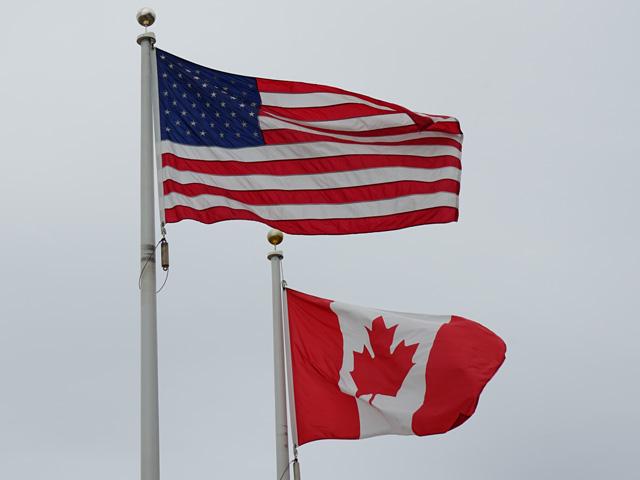
WASHINGTON (DTN) -- With the future of the U.S.-Mexico-Canada Agreement uncertain, a record number of state and provincial agricultural leaders gathered last week in Alberta, Canada, to confront growing North American trade tensions.
The Tri-National Agricultural Accord brought together 28 U.S. states, nine Canadian provinces and six Mexican states as agricultural leaders looked for a way to protect the trade relationships that bind the continent's farm economies together.
As USMCA enters its annual joint-review process, farmers, processors and exporters are looking for certainty around the supply chains and capital investments that depend on predictable trade across the three countries.
Patrick Wade, policy director at the National Association of State Departments of Agriculture, said attendees were eager to look ahead and advocate for certainty despite obstacles facing North American trade, including the dairy and alcohol trade war with Canada, dairy tariff rate quotas (TRQ) and seasonal produce trade carveouts.
"None of those irritants should stand in the way of a deal that really provides that long-term predictability," he said.
Delegates from the three countries signed a communique after the accord, sending a clear message that the USMCA is here to stay despite the Trump administration's decision not to renew the trilateral trade pact and instead conduct a joint annual review of the treaty.
"Delegates call on federal partners to work together to formally extend the agreement for an additional 16 years," the countries' delegates stated in the document.
MEXICO DEAL FIRST
But what will come first, trade experts tell DTN, is a bilateral deal with Mexico. A timeline reaching a deal by year's end is "meaningful and realistic," said Kristy Goodfellow, vice president of trade and industry affairs at the Corn Refiners Association.
With the midterm election one month away, a deal could come within weeks.
P[L1] D[0x0] M[300x250] OOP[F] ADUNIT[] T[]
Goodfellow, who attended the accord, observed several developments in trade negotiations last week.
While trade groups, USDA Foreign Agricultural Service Administrator Daniel Whitley, and state representatives met in Alberta, the G20 Trade Ministerial was being held in Milwaukee, Wisconsin, with trade representatives from the world's largest economies attending.
"It's another time and space that our senior leaders from, most notably from Canada and Mexico, are in the same room, and the ice didn't break," Goodfellow said about the event.
The fourth round of U.S.-Mexico trade negotiations was originally scheduled for the first days of October, in conjunction with the longstanding, 35-year-old Ag Accord, but was postponed.
Still, U.S. and Mexican trade officials met on the margins of the G20. For Goodfellow, the timing leaves open the possibility that an agreement could address some issues while leaving others for future talks.
"On Mexico, I wouldn't be surprised if an agreement was made that just left space for continued engagement on some of our toughest trade irritants, especially if we have an agreement in the next couple weeks or months," Goodfellow said.
That timeline would align, in part, with U.S. Trade Representative Jamieson Greer's statement in July: "I would love to have between now and the end of the year at least some arrangements -- one with Canada, one with Mexico."
(See "Greer: Canada, Mexico Deals Come First" here: https://www.dtnpf.com/….)
While Mexico has a longer list of irritants that change over time, including the seasonality of produce, Canada has negotiations that are "very explicit," Goodfellow said, such as how much dairy TRQs are allocated or how much access U.S. alcohol sales receive.
But a trade deal with Mexico in 2026 won't push Canada any further forward, she said.
"I think the political dynamics in Canada are so large right now that the U.S.-Mexico agreement and relationship isn't going to drive them (Canada) to the table or to make a deal," Goodfellow said.
CANADA'S WILLINGNESS TO CHANGE
While Canada struggles with internal government identity, the dairy TRQ conversation is shifting toward reform, favorable to the U.S.
"In public conversations we had at this meeting with some of the major dairy provinces in Canada, there is certainly a mutual recognition that this is a problem that can be solved," Wade told DTN.
New York Commissioner of Agriculture Richard Ball told DTN, "Some of the spirit of the agreement was not lived up to by our Canadian partners, and we made that very clear the last two accords that we needed to step up our game and actually be honest with each other, and there was an acknowledgement of that by the Canadians."
At the World Dairy Expo last week, Gregg Doud, president of the National Milk Producers Federation, said during a panel discussion that dairy negotiations will be part of a broader agreement rather than handled separately.
"Do I think this gets worked out? Yes," he said, reiterating that Canada is still the U.S.'s second-best market. But for now, he said, the path forward is largely a political question, depending on both Canada's internal politics and whether President Donald Trump chooses to engage.
Right now, the U.S. has imposed 50% tariffs on certain Canadian imports, including dairy and alcoholic beverages, while Canada has retaliated with tariffs on U.S. steel, dairy and agricultural equipment.
The joint review of the USMCA for 2027 is already underway. Written comments and requests to testify must be submitted by Jan. 12, 2027.
Read the Tri-National Accord Communique here: https://www.nasda.org/….
Jake Zajkowski can be reached at jake.zajkowski@dtn.com
Follow him on social platform X @jzajkow
(c) Copyright 2026 DTN, LLC. All rights reserved.